

Key Takeaways
- Multiple spiders appearing regularly in different rooms — especially common house spiders and wolf spiders — is one of the clearest signs of a growing infestation.
- Spider egg sacs can each contain hundreds of baby spiders; finding more than one means reproduction is already underway in your home.
- Spiders follow insects — a spider problem almost always signals a larger underlying pest issue worth addressing.
- Lesser-known signs like spider droppings and collections of dead insects near webs are easy to miss but meaningful.
- Venomous species like the brown recluse are uncommon but do appear in certain regions — correct identification matters before treatment.
- Professional pest control addresses both the spiders and the insect populations drawing them in, which is why DIY rarely solves the full problem.
Spiders are common, and most of them aren’t a problem. An occasional spider in a corner or near a window is just part of having a home. But there’s a difference between the odd visitor and an established spider population — and knowing that difference early saves you a lot of frustration.
The signs of a spider infestation aren’t always dramatic. You won’t necessarily find a web across your doorway or dozens of spiders in plain sight. More often, the indicators are subtle: a few too many sightings over a couple of weeks, webs showing up faster than you can clear them, or small details that don’t quite make sense until you know what to look for.
This guide covers what those signs actually look like, why infestations happen, and at what point a pest control professional makes more sense than handling it yourself.
The Signs That Actually Indicate a Spider Infestation
Spiders Showing Up in Multiple Rooms
Seeing one spider is unremarkable. Seeing spiders consistently — across the kitchen, a bedroom, the basement, and the garage — is a different situation. That kind of spread suggests spiders have settled in rather than wandered through.
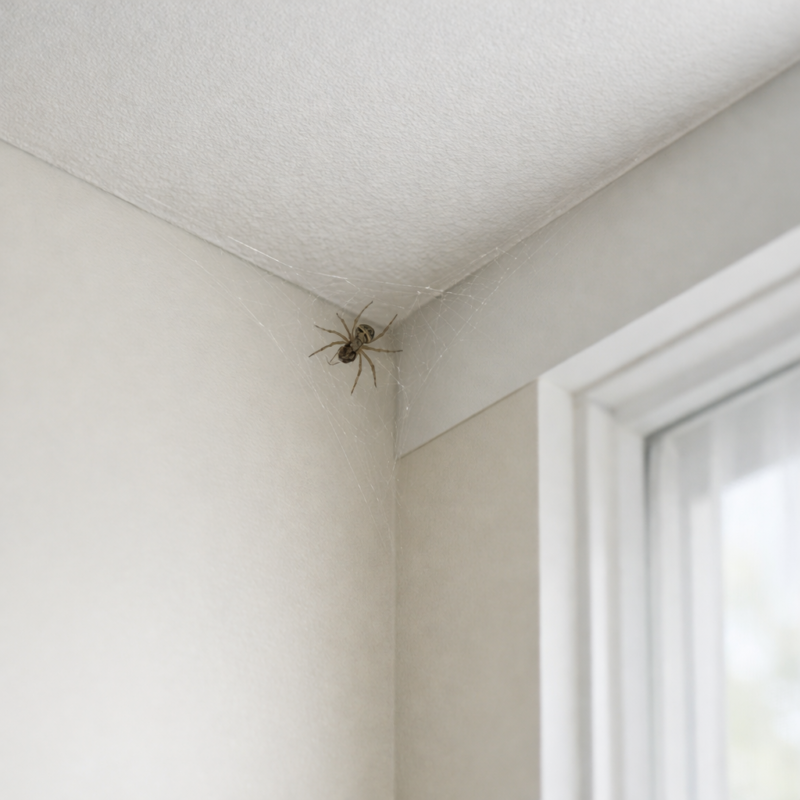
Pay attention to what species you’re seeing. Common house spiders and cellar spiders tend to stay near ceilings and upper corners. Wolf spiders move along floors and baseboards. Cobweb spiders cluster near light sources. Multiple species active at the same time points to a well-established spider population, not a seasonal fluke.
Spider Webs Returning After You Remove Them
Finding one web isn’t a red flag. Finding them in the same spots every few days is. Active spiders rebuild quickly — if you’re clearing webs from a corner and they reappear within a week, the spider is still there and still working.
Check the usual hiding spots: ceiling corners, the spaces behind furniture, window frames, and the areas around basement pipes. Cobwebs that gather dust and stay untouched are often older and abandoned; fresh, tightly structured webs indicate current activity.
Spider Egg Sacs
This is the sign most homeowners miss, and it’s one of the most important. Spider egg sacs are small — often marble-sized or smaller — and typically tucked into corners, gaps in baseboards, or behind stored items. They’re usually wrapped in silk and can be white, beige, or tan depending on the species.
A single egg sac can contain anywhere from a few dozen to several hundred eggs. Finding multiple sacs means spiders have been reproducing in your home long enough to complete full cycles. At that point, you’re not dealing with a small problem.
Baby Spiders
If you’re seeing clusters of very small, nearly translucent spiders — especially near corners or in undisturbed areas — a sac has already hatched. Baby spiders disperse quickly through a home via a process called ballooning, using air currents to spread. What starts in one area of the house can spread to several within days.
Spider Droppings and Dead Insects
Two signs that often go unnoticed: spider droppings and the accumulation of dead insects near webs. Spider droppings look like small dark specks or tiny paint splatters, usually found on surfaces below active webs. Dead insects — dried fly carcasses, moth wings, small beetle shells — collecting underneath a web confirm that a spider has been feeding there regularly.
If you’re seeing these around baseboards, below ceiling corners, or near window sills, a spider has claimed that spot as territory.
Increased Insect Activity
Spiders go where prey is. A noticeable rise in insect activity — flies, gnats, moths, flying insects near lights — will predictably bring more spiders in behind them. If you’re noticing both at the same time, the insect population is the root issue and the spider infestation is the downstream effect.
This matters for treatment: addressing only the spiders without reducing insect populations means the problem will likely return.
Why Spiders Are Moving Into Your Home
Understanding what’s drawing spiders in makes prevention significantly more effective.
Insects as prey. This is the primary driver. Spiders are predators, and they position themselves near reliable food sources. High insect populations inside or immediately around your home are the most common reason spider numbers increase.
Entry points. Spiders get in the same way most pests do — gaps around door frames and windows, cracks in the foundation, openings around utility pipes, and damaged screens. Wolf spiders in particular are ground-level hunters that move through these low gaps frequently.
Hiding spots and clutter. Undisturbed storage areas are ideal for spiders. Cardboard boxes, infrequently moved furniture, and stacked items in garages and basements create the dark, sheltered environments spiders prefer for nesting and egg laying.
Seasonal pressure. In Mira’s northern markets — Ohio, Michigan, Indiana, Illinois — spider activity increases noticeably in late summer and fall as temperatures drop. Spiders that have been living outside move toward warmth and shelter. In warmer markets like Florida and Georgia, spider pressure tends to be more consistent year-round due to the climate and the sustained insect populations it supports.
Are Spider Infestations Dangerous?
For most species, the honest answer is no — at least not directly. House spiders, cellar spiders, and cobweb spiders are nuisances, not threats. They don’t bite unless handled roughly, and they’re actually doing minor pest control work by catching insects.
The species worth knowing are the brown recluse and, in some regions, the black widow. Brown recluse spiders are present across much of the South and Midwest — including parts of Mira’s Georgia, Indiana, and Ohio markets. They’re reclusive by nature (hence the name) and typically found in undisturbed areas like closets, behind boxes, and inside shoes or clothing that hasn’t been moved recently. Their bites are medically significant and can cause tissue damage.
Even when venomous spiders aren’t involved, a spider infestation is worth addressing because it’s rarely just about spiders. Active infestations almost always signal elevated insect activity, which is a pest problem in its own right.
When to Call a Professional
DIY spider control — vacuuming webs, sealing entry points, reducing clutter — has a real place in prevention. But there are situations where professional pest control is the right call, and waiting past those points usually makes the problem harder and more expensive to resolve.
Call Mira if any of these apply:
- You’ve found multiple egg sacs, or you’ve seen baby spiders dispersing through your home. The infestation is already reproducing and will expand without intervention.
- Spider sightings are consistent and occurring in multiple areas of the home. This isn’t a wandering visitor — it’s an established population.
- You’ve identified or suspect a venomous species. Brown recluse identification in particular requires a professional eye, and treatment should not be handled with store products.
- You’ve treated the visible problem and it keeps coming back. Recurring infestations almost always point to an underlying insect issue or an entry point that hasn’t been addressed.
- You’re seeing signs of multiple pest types at once. Spiders alongside flies, ants, or other insects means the conditions in or around your home are supporting a broader pest population.
Professional spider control treats the hiding spots and entry points that over-the-counter products don’t reach, and addresses the insect activity that made your home attractive to spiders in the first place. That’s the difference between a short-term fix and lasting results.
Mira serves homeowners across Orlando, Tampa, Atlanta, Columbus, Grand Rapids, Indianapolis, Chicago, and more — with family-safe pest control designed to address the full picture, not just the symptoms.
Frequently Asked Questions
What are the most common signs of a spider infestation? The clearest signs are frequent spider sightings across multiple rooms, webs that return quickly after removal, and spider egg sacs in corners or undisturbed areas. Less obvious indicators include spider droppings on surfaces below active webs and accumulations of dead insects near feeding spots. Any combination of these warrants a closer look.
How do I know if I have a spider infestation or just occasional spiders? An occasional spider shows up in one spot and doesn’t repeat. An infestation involves consistent sightings in different areas of the home, webs reappearing after you clear them, or visible egg sacs — any of which indicate spiders are actively living and reproducing inside rather than passing through.
Why do I suddenly have so many spiders in my house? A sudden increase in spider activity almost always ties back to insects. Spiders move toward reliable food sources, so a spike in flies, gnats, or other insects inside your home will draw spiders in behind them. Seasonal changes also play a role — in cooler climates, spiders push indoors as temperatures fall in late summer and autumn.
Are house spiders dangerous? Most common house spiders, cellar spiders, and cobweb spiders pose no meaningful risk to people. The species that do matter — particularly the brown recluse — are less common but present in parts of the Midwest and South. If you’re finding spiders you can’t identify, or you have concerns about a bite, professional identification is the safest next step.
Can I get rid of a spider infestation myself? For very minor activity, consistent vacuuming of webs and egg sacs, sealing entry points, and reducing clutter can help. But once an infestation is established — multiple sacs, widespread sightings, recurring webs — DIY approaches typically address the surface without resolving the underlying conditions. Professional pest control is more effective at that stage because it treats the root cause, not just the visible signs.
If you’re seeing signs that go beyond the occasional spider, the problem usually runs deeper than it looks. Mira Home’s pest control team serves families across Florida, Georgia, Ohio, Michigan, Indiana, Illinois, Kentucky, and Utah — with home protection plans that target spiders and the conditions that attract them.
Get a Free Quote today and let Mira take it from there.
