

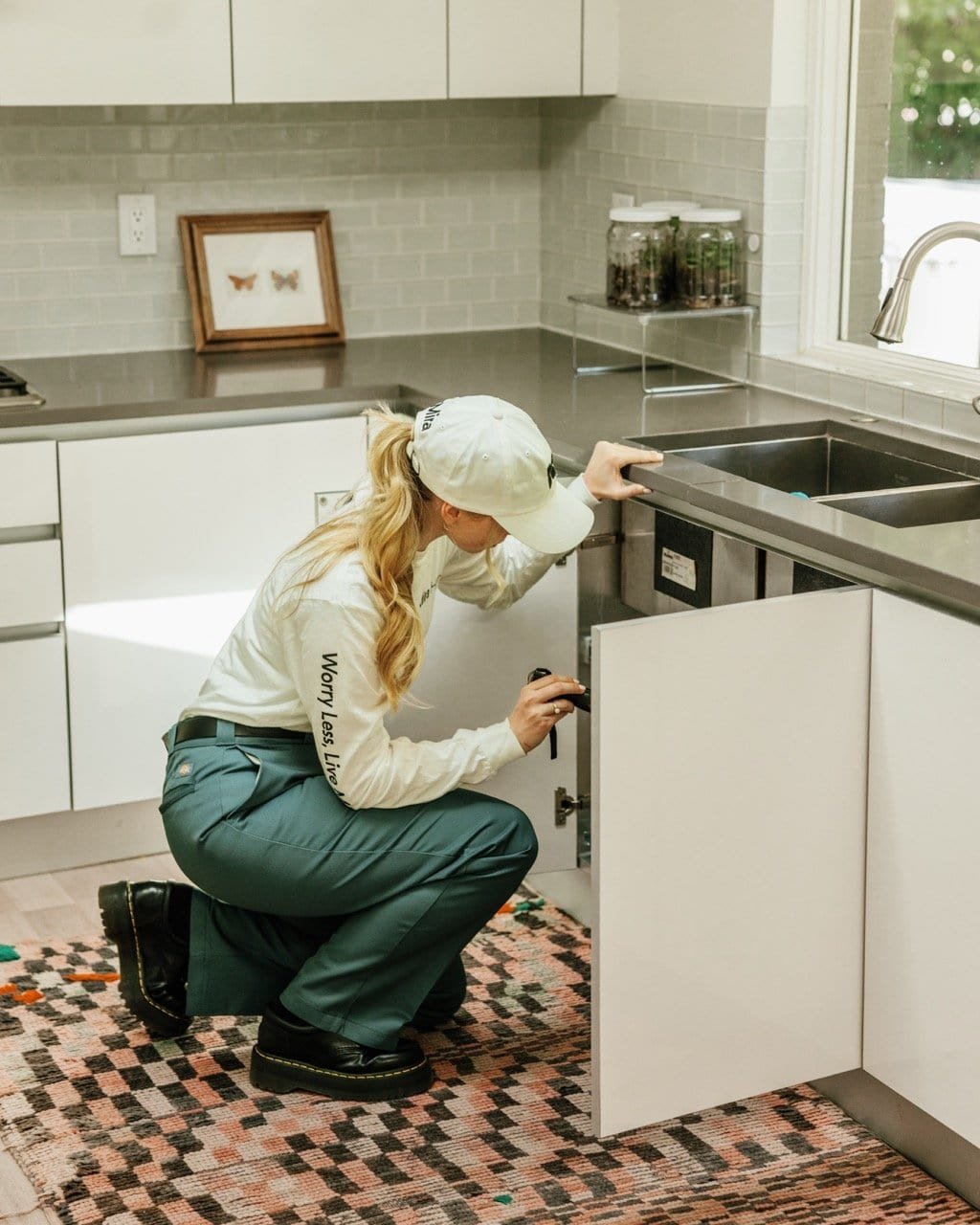

A wasp nest under the eaves or a yellow jacket nest in the ground turns your own yard into someplace you don’t want to be. Unlike most pests, wasps fight back. Mira removes the nests and treats the areas wasps keep returning to, so you can use your yard again without watching the sky.

Why Wasps
It looks simple: spray the nest, knock it down, done. The problem is what happens in the seconds after. Disturb a nest and the colony comes out defending it, and a single wasp can sting more than once. Yellow jackets are worse, since they nest in the ground where you can’t always see them, and a mower or a footstep is enough to set them off. For anyone allergic, that’s not just painful, it’s dangerous.
Knocking down the visible nest doesn’t end it, either. If the nest isn’t treated properly, surviving wasps can rebuild nearby, and the spot that drew them in the first place is still there. Handling it means treating the nest safely and dealing with the areas wasps keep returning to.
How We Treat
We find the nests, the active ones you’ve seen and the ones you haven’t, around eaves, soffits, overhangs, and out in the yard.
We treat and remove accessible nests directly, sweep the spots wasps favor, and treat the entry points around the home.
If wasps come back between visits, so do we, at no extra charge.
We treat and remove accessible nests in a way that deals with the colony rather than just scattering it, then sweep the eaves, soffits, and overhangs where wasps and hornets like to build, clearing nests and treating those spots so they’re less likely to rebuild there.
For yellow jackets and ground nests the approach is different, since the nest is hidden and disturbing it is the dangerous part. Your technician locates the nest and treats it directly, which is the safe way to deal with a ground colony rather than going after it with a can of spray.

Free quote, real number, no pressure.
Kids & Pets
Wasp treatment raises two safety questions. The first is getting stung: removing a nest is genuinely risky, especially a ground nest or one near a doorway, which is the main reason to have someone handle it who does it every day and has the equipment to do it safely. The second is the usual one, and the answer is the same as all our service: treatments are applied with care and according to the product label directions, with the usual guidance to keep children and pets off treated surfaces until they’re dry.
If anyone in the home has a known sting allergy, or you have specific concerns, tell us when you book so your technician can plan the visit accordingly.
The Re-Service Promise
Wasp activity climbs through the summer, and a new nest can go up between your scheduled treatments. If that happens, you don’t wait and you don’t pay extra. Call us and we’ll come back out to re-treat at no additional charge.
It’s part of every Mira service plan: regular scheduled treatments, plus re-service in between whenever you need it.
Learn More
They get lumped together, but they don’t all behave the same, and the nest location often tells you more than the wasp does. A paper wasp nest under the eaves, a bald-faced hornet nest in a tree, and a yellow jacket nest in the ground each call for a different approach. Our wasps pest library breaks down the common types and where they build.
Honeybees are a different story. They’re protected pollinators, not a pest we treat, so if you’ve found a honeybee colony we’ll point you toward a local beekeeper who can relocate it safely.

More on Wasps
How to get rid of yellow jackets
What works, what doesn’t, and when to call someone in.
Wasp nest removal
Why a nest in the attic or eaves is one to leave to a pro.
Types of wasps
Paper wasps, hornets, and yellow jackets, told apart.
Wasps in Ohio
The stinging pests that pick up through summer and fall.
Local
Wasps are a bigger problem in some of our markets than others. Georgia and Florida deal with wasps and hornets through a long warm season, while Ohio sees heavy yellow jacket and paper wasp activity through summer and into fall. Mira treats wasps with local technicians who know which stinging pests are active where you live, not a national call center. See where we service →
FAQs
It depends on your home, how many nests there are, and where they’re located, since a ground nest or a hard-to-reach nest takes more to handle safely. Rather than guess, we’ll give you a real number for your situation. Request a free quote and you’ll know what it costs before you commit to anything.
Yes, and those are exactly the ones you don’t want to tackle yourself. Hidden and high nests, and ground nests especially, are where people get hurt trying to DIY it. Your technician has the equipment and the approach to deal with them safely.
Treatments are applied with care and according to the product label directions, and the standard guidance is to keep children and pets off treated surfaces until they’re dry. If anyone in the home has a sting allergy or you have other concerns, tell us when you book and your technician can plan around it.
A spot that attracted wasps once can attract them again, which is why we treat the areas they favor, not just the nest. Ongoing service through the warm months is what keeps new nests from taking hold.
Get a free quote for your home, or call and talk to someone local. No pressure and no upsell, just an honest read on what your home needs.
Your request was submitted successfully