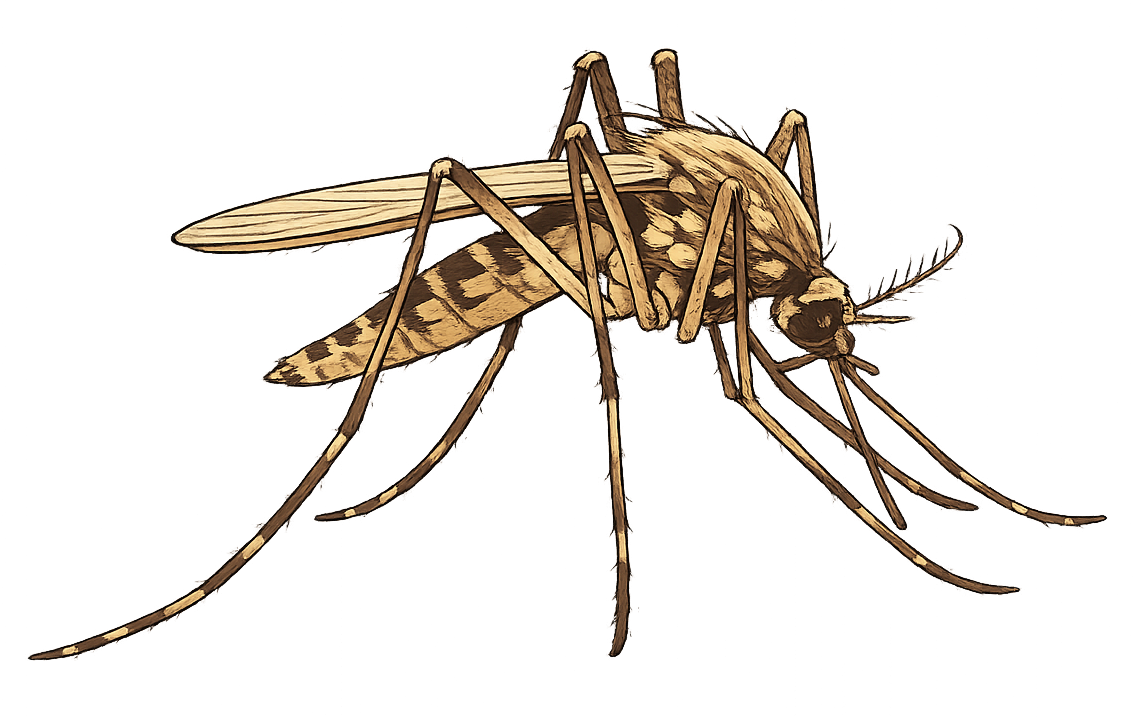
How to Recognize a Mosquito
Most homeowners can identify a mosquito by the time it lands on them. What most people don’t know is that certain species of mosquitoes bite at different times of day, prefer different breeding sites, and carry different disease risks.
Key features all mosquitoes share:
- Small, slender body (typically about ¼ inch long)
- Long, thin legs
- One pair of wings (mosquitoes are true flies — order Diptera)
- A long, thin proboscis used for feeding (only females bite; males feed on nectar)
- High-pitched whine from rapid wingbeats
The three species groups most homeowners encounter across the Southeast and Midwest:
- Asian tiger mosquito (Aedes albopictus): Black-and-white striped legs. Bites aggressively during the day, not just dawn and dusk. Breeds in tiny pockets of standing water like flowerpots, bottle caps, and gutters. Established across Georgia and Florida; expanding northward. Carries Zika, dengue, West Nile, and Eastern Equine Encephalitis. The most aggressive day-biter most homeowners will encounter.
- Southern house mosquito (Culex quinquefasciatus): Brown, less distinctive in appearance, bites primarily at dusk and through the night. Breeds in standing water — storm drains, ditches, neglected birdbaths. The primary West Nile virus vector in Georgia. Common across the Southeast.
- Floodwater mosquitoes (multiple species): Lay eggs in damp soil that stay dormant until heavy rain causes them to hatch in waves. Why you can have almost no mosquitoes one week and a massive surge two days after a thunderstorm. Common across all warm and humid regions.
If what you’re seeing is small and bites but doesn’t have the long legs or proboscis described above, you may be looking at a gnat or a midge; different pests, treated differently.