

Key Takeaways
- Cockroach “nests” are clusters of roaches, eggs, and droppings hidden in dark, moist areas.
- They’re often found in kitchens, bathrooms, basements, wall voids, furniture, and outdoor debris.
- Signs include droppings, egg cases, shed skins, a musty odor, and frequent sightings.
- Treating an infestation starts with locating the nest; from there, professional treatment targets the source.
Introduction
Finding a cockroach in your home is unsettling, but discovering a full nest is far worse. Roaches aren’t just unpleasant; they carry bacteria, contaminate food, and can trigger allergies and asthma.
The key to addressing an infestation is simple: find the nest. Roaches multiply quickly, and treating only what you see leaves the hidden colony to keep growing.
This guide explains what a cockroach nest looks like, how to locate one, and how to keep roaches from coming back. For a closer look at the different species found indoors, see our guide to types of cockroaches.
What Does a Cockroach Nest Look Like?
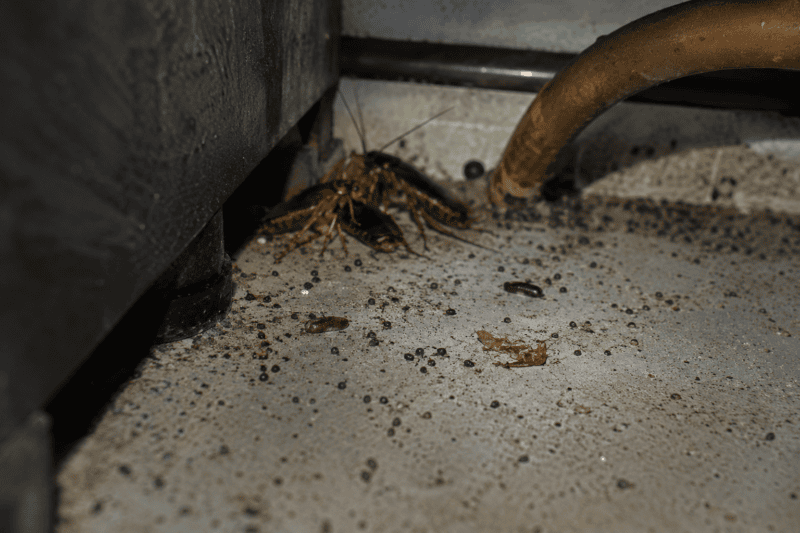
Despite the name, cockroaches don’t build traditional nests like birds or ants. There’s no woven structure to look for. Instead, a cockroach “nest” is a cluster of roaches gathered in a hidden, sheltered spot close to food, moisture, and warmth, surrounded by the mess they leave behind.
Here’s what a cockroach nest actually looks like when you find one:
- Live roaches grouped together, often adults and smaller nymphs (young roaches) in the same spot
- Egg cases (oothecae), which are small brown, capsule-shaped casings, attached to surfaces or scattered nearby
- Droppings that resemble black pepper, coffee grounds, or dark specks (larger roaches leave marks that look almost like smears)
- Shed skins left behind as young roaches molt and grow
- Dead roaches and general debris
- A distinct musty, oily odor from their pheromones and waste
Put simply, you’re rarely looking for a single tidy “nest.” You’re looking for a concentrated area of roach activity, droppings, egg cases, and odor, usually tucked into a dark, warm, humid space. In many homes these areas are hidden behind appliances, inside cabinets, under sinks, or within wall voids, which makes them easy to miss without a careful inspection.
Signs You May Have a Cockroach Nest in Your Home
In some cases you won’t see the nest directly, but there are clear signs that point to a hidden cockroach nest nearby. If you’ve noticed more than a stray roach, look for these indicators:
- Droppings: Small, dark specks found in corners, under appliances, or in drawers.
- Egg cases (oothecae): Brown, capsule-like structures found near walls or behind furniture.
- Shed skins: Young roaches molt as they grow, leaving thin exoskeletons behind.
- Live or dead roaches: Frequent sightings, especially during the day, signal a large population.
- Musty odor: A strong, oily smell is one of the surest signs of a nearby nest.
These signs often point back to a hidden cockroach nest somewhere nearby, even if it’s not immediately visible. See more warning signs in our guide to the signs of a cockroach infestation.
Where Do Cockroaches Nest?
Roaches nest where they can stay close to food, warmth, and moisture. The most common spots include:
- Under and behind kitchen appliances (refrigerators, stoves, dishwashers)
- Inside and under cabinets, especially near the sink
- Bathrooms, around plumbing and damp areas
- Basements, crawl spaces, and utility rooms
- Wall voids and gaps behind baseboards
- Cluttered storage areas and cardboard
- Outdoor debris, mulch, and woodpiles near the foundation
If you find one nesting site, it’s worth checking the others, since a large population can spread across multiple hiding spots.
Real-Life Example: A Hidden Nest Behind the Wall
A homeowner in Columbus once reported roaches “coming from nowhere.” After several DIY treatments, Mira technicians traced the infestation to a wall cavity behind a leaking pipe under the kitchen sink. Moisture had attracted the roaches, and the enclosed space created ideal nesting conditions.
Once the wall was opened, technicians found dozens of adults, egg cases, and debris, all signs of a mature nest. It’s a good reminder that infestations often hide behind walls or appliances, making professional detection essential.
How to Find a Cockroach Nest (Step-by-Step)
Step 1: Observe activity after dark. Roaches are nocturnal, so turn off the lights and inspect the kitchen or bathroom with a flashlight late at night or early in the morning.
Step 2: Follow the evidence. Look for droppings, shed skins, and odor trails. These often lead back to their hiding place.
Step 3: Check common spots systematically. Inspect under sinks, behind refrigerators, in cabinets, and near baseboards. Move slowly and note where roaches scatter.
Step 4: Use tools to see hidden areas. A flashlight, mirror, or small camera can help you check behind or beneath appliances and furniture.
Step 5: Look near moisture sources. Roaches thrive near leaky pipes, condensation, and damp walls. If you find a water source, you may find their nest nearby.
What to Do Once You’ve Found the Nest
Locating the nest is the hard part, and the most important. Once you know where the colony is, treatment can be directed at the source rather than at the roaches you happen to see. Effective treatment generally combines targeted baits, growth regulators that interrupt the breeding cycle, thorough cleaning of the area, and sealing the gaps that let roaches in.
Because roaches reproduce quickly and shelter deep in wall voids and cavities, reaching the full colony usually calls for professional treatment rather than surface sprays. For a full walkthrough of treatment options, see our guide on how to get rid of cockroaches.
Keep Roaches From Returning
Once a nest is dealt with, the conditions that attracted it are what determine whether roaches come back: available food, standing moisture, clutter, and open entry points. Reducing those, through sealed food storage, fixing leaks, decluttering, and closing gaps around plumbing, makes a home far less hospitable to a new colony.
Why Professional Pest Control Helps
DIY efforts can reduce the roaches you see, but reaching a nest hidden in a wall void or behind appliances is difficult without the right tools and experience. Professional technicians can locate concealed nests, treat the source directly, and put a follow-up plan in place so the infestation is managed over time.
Roaches reproduce quickly, so getting to the colony, not just the surface activity, is what makes the difference. Mira technicians treat homes using pet-conscious methods and a plan tailored to the situation.
Conclusion
Cockroach nests are the root of an infestation, which is why locating the nest matters more than treating the roaches you happen to see. Reducing food, moisture, and entry points makes a home far less likely to attract a new colony. When an infestation is established or the nest is hard to reach, professional support is the most reliable way to address the source.
If you suspect a cockroach nest in your home, the infestation is likely already established. Schedule a consultation with Mira Home to inspect, treat, and protect your home from future cockroach problems.
