You notice one on the ceiling. Then one in the bathroom corner. Then another near the back door. By October, it feels like your house has been claimed.
You’re not imagining it. Fall is when spider sightings inside homes peak — and there’s a specific reason it happens every year around the same time.
Spider Season Is Real — Here’s When It Peaks
Most people think of summer as bug season. For spiders, fall is more significant.
Spiders don’t hibernate. They’re active year-round, but two things happen in fall that bring them out where you can see them. First, dropping temperatures and shorter days trigger mating season for most common house spider species. Male spiders leave their webs and start moving — searching for females. That movement is what puts them in the middle of your floor at 10 PM.
Second, the same cooling weather pushes insects toward the warmth of your home’s foundation. Where insects go, spiders follow. Your house becomes a reliable hunting ground right when outdoor food sources dry up.
Spider season typically runs from late August through October in most of the country, with peak activity in September and early October. If you’re in the middle of that window right now, the timing explains a lot.
Which Spiders Are You Most Likely Seeing?
Not every spider you find indoors is the same problem. Knowing which one you’re dealing with tells you something about where it came from and what’s keeping it around.
Cellar Spiders
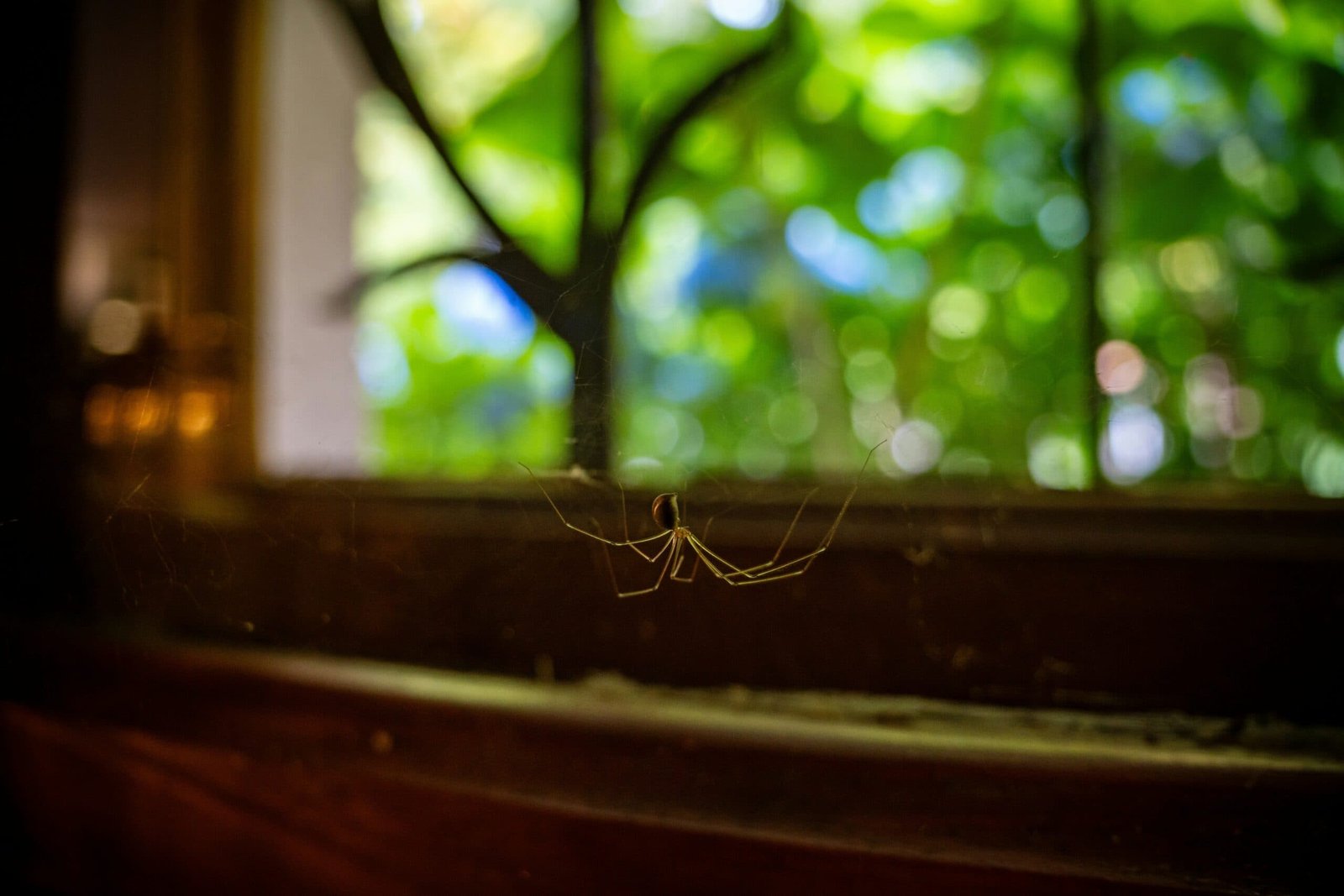
Cellar spiders — often called “daddy long legs” — are long-legged, pale, and nearly transparent. They build loose, messy webs in corners, basements, crawl spaces, and garages. They don’t come in from outside in fall so much as they’ve been there all along. Their populations build steadily through spring and summer, and by fall you’re noticing what’s accumulated.
They’re harmless and eat other insects — including other spiders. Not a reason to keep them, but worth knowing.
Wolf Spiders
Wolf spiders are the ones that startle people. They’re large — sometimes over an inch across — fast-moving, and dark brown or gray. They don’t build webs. They hunt on the ground, which means they’re running across your floor, not sitting in a corner.
They come inside through low-level entry points: gaps under doors, cracks in the foundation, spaces around utility lines. Wolf spider sightings spike in fall because males are actively searching for mates and covering a lot of ground in the process.
Common House Spiders
The small, brown, round-bodied spiders building cobwebs in your window frames are almost certainly common house spiders. They’re the most frequently encountered indoor species and are responsible for most of the webs you find in undisturbed corners. Harmless, but persistent.
If you’re in Michigan, Georgia, or Florida, we have region-specific guides on the spiders most common in those areas.
What’s Actually Drawing Spiders Inside
Spiders don’t come inside looking for warmth the way mice do. They come inside following food. More spiders usually means more insects — and more insects usually means something is attracting them.
Outdoor lighting is a big one. Standard white bulbs attract moths, gnats, and other flying insects. Those insects collect near the light, and spiders follow. Yellow or sodium vapor bulbs are less attractive to insects and break that chain.
Moisture matters too. Leaky gutters, standing water near the foundation, or a damp crawl space all create conditions insects — and the spiders that eat them — prefer. Firewood stacked against the house is another common source. It’s warm, sheltered, and full of insects working through the wood.
Understanding what draws pests toward your home goes a long way toward reducing all of them, spiders included.
How to Keep Spiders Away — What Actually Works
Change your outdoor lighting
Switch exterior bulbs to yellow or sodium vapor lights. It won’t eliminate every insect, but it reduces the ones drawn to your entry points at night.
Seal gaps around your foundation and doors
Walk the perimeter of your home and look for gaps around pipes, utility lines, door sweeps, and window frames. Caulk and weatherstripping handle most of it. This same step helps keep out rodents and other fall invaders.
Remove webs consistently
Webs contain egg sacs. A web you left up in September can hatch dozens of spiders by November. Knocking webs down weekly — especially in garages, basements, and around exterior doors — removes both the spider and the next generation. For a closer look at what those signs mean, see our guide on signs of a spider infestation.
Reduce clutter and ground-level storage
Spiders prefer undisturbed spaces. Boxes on the floor, piles of laundry, and storage areas with low airflow are ideal habitat. Getting items off the floor removes the hiding spots they need.
Keep firewood away from the house
Stack it at least 20 feet from any exterior wall, raised off the ground if possible. Firewood is one of the most common ways spiders and insects get introduced right next to entry points.
When DIY Isn’t Solving It
For a handful of spiders in the fall, the steps above work fine. Most people can manage a mild seasonal uptick without professional help. If you want to understand what DIY products actually do — and where they fall short — our spraying for bugs guide covers it.
The issue is when you can’t stay ahead of it. Seeing spiders regularly across multiple rooms, or noticing them week after week despite your efforts, usually points to an underlying insect population problem — not just seasonal movement from outside.
Store-bought sprays kill the spiders you see. What they don’t do is address the food source bringing them in. Spiders also don’t groom themselves the way ants or cockroaches do, which makes contact-based products less effective on them. You can spray through one wave and have another appear two weeks later.
Spider egg sacs are resilient. A standard over-the-counter treatment that kills adults won’t destroy egg sacs already in the walls or undisturbed corners. Those hatch later. A one-time treatment rarely solves a recurring spider problem — the next generation is already there.
Professional spider control targets the insects driving spider activity, not just the spiders themselves. An inspection identifies entry points, moisture issues, and the specific pest pressure behind what you’re seeing. Consistent treatment breaks the cycle instead of resetting it. If you’re wondering how often professional service should happen, this breakdown is a good starting point.
If your spider problem has gotten worse year over year, or this fall feels noticeably heavier than last year, that’s a pattern worth addressing before spring.
Frequently Asked Questions About Fall Spiders
Why am I seeing so many spiders in my house this fall?
Fall is mating season for most common house spiders, so males leave their webs and move around looking for females, which is when you tend to spot them. Cooling weather also pushes insects toward your home, and spiders follow their food indoors. That timing is why sightings peak in September and October.
What month do spiders come inside?
In most of the country, indoor spider activity picks up from late August through October, with the peak in September and early October. Spiders are active year round, but fall is when you are most likely to see them out in the open.
Does seeing one spider mean there are more?
Often, yes. A single spider can be a lone wanderer, but spiders come inside following insects, so repeated sightings usually point to a food source and more spiders nearby. Finding webs or egg sacs is a stronger sign that a population has settled in.
Do spiders in the house mean it’s dirty?
Not necessarily. Spiders are drawn to insects, moisture, and quiet, undisturbed spaces, not to mess specifically. Even a clean home can attract them if there is outdoor lighting, damp areas, or clutter they can hide in.
Are house spiders dangerous?
Most spiders you find indoors in fall, like cellar spiders, common house spiders, and wolf spiders, are harmless and tend to avoid people. They can startle you, but they are not a health threat. If you are seeing them regularly across several rooms, that usually points to an insect problem worth looking into.
Your Home Should Feel Like Yours
A spider or two in October is normal. Waking up to new webs every morning, spotting wolf spiders running across the floor, or finding them in rooms you use every day — that’s a different situation.
Your home is where life happens. It should feel like yours, not theirs.